
Caregiver Burnout Truths
Being called “selfless” isn’t always the compliment we think it is.
Caregivers, mothers especially. are often praised for the sacrifices for the sake of their family. We’re told that caregivers are strong, resilient, and tireless. They are admired for putting everyone else first, for anticipating needs before they’re spoken, and for holding families together behind the scenes.
On the surface, it sounds like praise and recognition. I once spoke to that strength with a client only to realize that I was giving into the same exact harmful narrative. My client told me, “I am so tired of being strong.” Not only was I blown away by their bravery, they taught me a valuable lesson that day. When being “selfless” and “strong” become your identity, there’s very little room left to be human. What happens when you’re no longer able to hold it all? That’s where shame comes in and holds you back from asking for support or being able to rest.
Burnout doesn’t happen because caregivers aren’t strong enough. It happens because they are strong, for too long, with too little support. What makes caregiver burnout especially painful is how invisible the labor can be. Things may look fine: The household runs, kids are cared for, appointments are managed. However, internally, the caregiver may feel emotionally numb, overwhelmed, and in reality is one small request away from breaking. Because caregiving is so often tied to identity, asking for help can feel like failure instead of necessity. Needing help does not mean you’re weak, ungrateful, or incapable. It means you are human.
What is one thing you’re carrying right now that you wish you could set down, even just for an hour? Is it decision-making? Household chores or responsibilities? Holding space for other people’s emotions? And then the harder question: Who could help you carry it, and how can you ask?
Asking for support doesn’t have to mean a dramatic conversation or a complete overhaul of your life. It can start small: naming your exhaustion, delegating one task, allowing someone else to show up imperfectly instead of doing it all yourself. Support doesn’t diminish your love or commitment, it sustains it.
Caregivers deserve care, too. Not as an afterthought. Not only when they’re at a breaking point. But as a basic truth. Because being “selfless” should never mean disappearing.
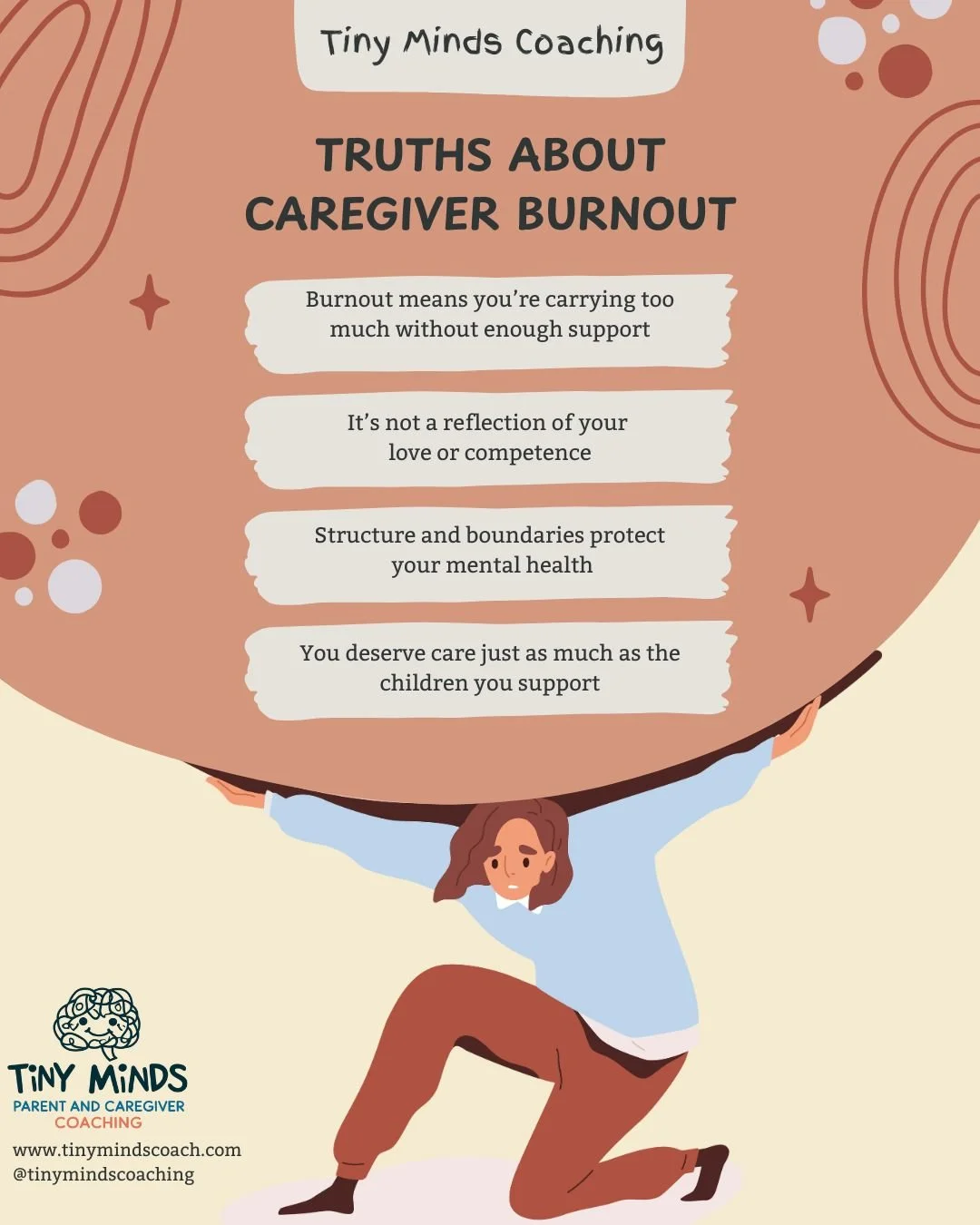
Truths about caregiver burnout: Burnout means you’re carrying too much without enough support. It’s not a reflection of your love or competence. Structure and boundaries protect your mental health. You deserve care just as much as the children you support.
